
Perfumes of My Grandparents: Augusta Read Thomas & the Orchestral Canon
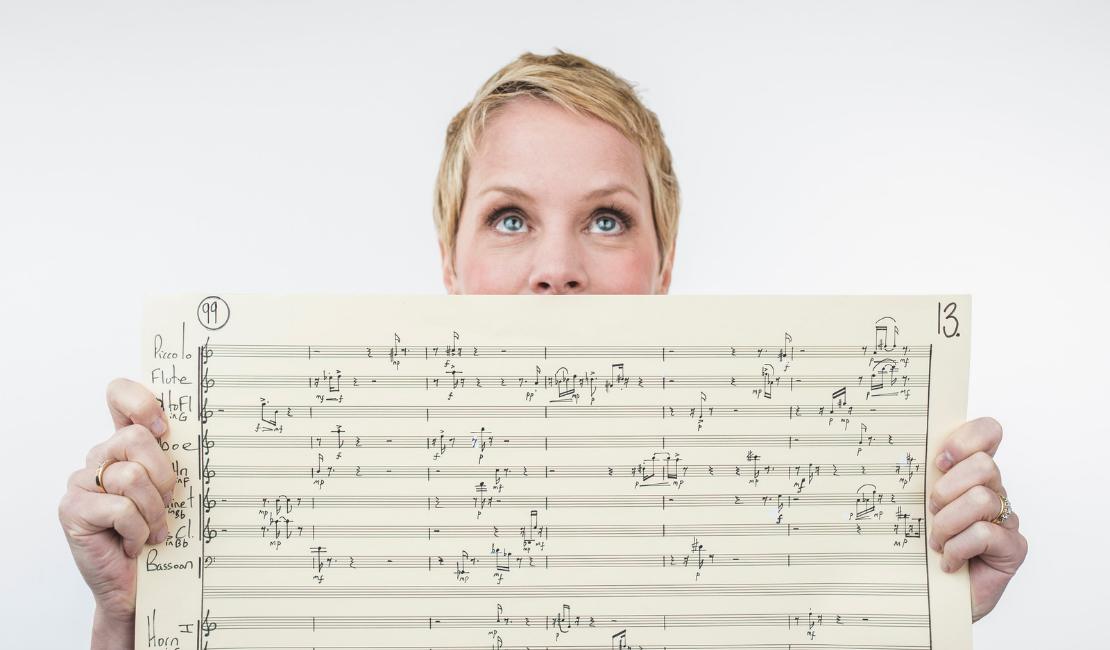
Every composer has a unique relationship with the work of the past. Morton Feldman loved Chopin and Sibelius, yet subverted the canon of western classical music with graphic notation and negative space. George Lewis has embraced the noisiness of decolonization; his writing is in thoughtful and provocative dialogue with the repertory. Others have reworked canonical works in ways that both preserve and update their identities, such as Max Richter in The Four Seasons Recomposed, Missy Mazzoli and Sarah Kirkland Snider with the music of Hildegard von Bingen, and Charles Wuorinen with Machault mon chou.
Composer Augusta Read Thomas has been at the vanguard of contemporary American music for decades. A GRAMMY-winning composer, influential teacher, and founder of the important Chicago Center for Contemporary Composition, she writes “boldly considered music that celebrates the sound of the instruments and reaffirms the vitality of orchestral music” (The Philadelphia Inquirer). That very vitality—the long tradition of the symphony orchestra—also forms a persistent source of inspiration for Thomas.
What she calls “perfumes of [her] grandparents” (Beethoven, Stravinsky, Ravel, Debussy, Mahler, and more) are often woven through her approaches to harmony, rhythm, and texture. These compelling connections with masterworks of the last two centuries can be drawn out through symphonic programs that set her work alongside music of the past. To this end, Wise Music Classical is pleased to present a selection of pairings between the music of Augusta Read Thomas and treasures of the orchestral canon, curated by the composer.
Repertoire Pairings
Absolute Ocean, Augusta Read Thomas
Absolute Ocean was commissioned to pair with Mahler’s Symphony No. 4, and features prominent parts for soprano and harpist. It provides an excellent opportunity to highlight both musicians, expanding the soprano’s role from the fourth movement of the Mahler and starring the harp in obbligato passages. Augusta Read Thomas’ characteristically intricate percussion writing is beautifully matched with Mahler’s lavish use of the section in his Symphony. Thomas’ choice of three poems by e.e. cummings for the text of Absolute Ocean also provides a rich point of intersection, with cummings’ experimental approach to poetic form and grammar serving as a compelling linguistic analogue to Mahler’s expansive, unorthodox treatment of musical form.
Aureole, Augusta Read Thomas
Aureole draws on Beethoven’s sound world through bright fanfares and pervasive harmonic and intervallic allusion. As conductor Michael Lewanski writes, “the title, Aureole, refers to an encircling ring of light,” such as “radiance surrounding the head or the whole figure in the representation of a sacred personage or saint […] Surely the sacred personage in this situation is Beethoven himself. Thomas’ use both of tonal centers and intervals crucial to the Ninth Symphony is a musical aureole around the earlier composer’s work.” Aureole expands on Beethoven’s percussion section with a variety of additional instruments, including crotales, glockenspiel, bongos, congas, tubular bells, and Taiko drum. This additional instrumental color provides a beautifully rhythmic complement to the jubilant choral forces of Beethoven’s Ninth.
Terpsichore's Dream, Augusta Read Thomas
The Firebird, Igor Stravinsky
Terpsichore’s Dream is an energetic ballet named for the ancient Greek muse of dance, making for an excellent counterpart to Stravinsky’s Petroushka or The Firebird. “An evocative, atmospheric piece that is filled with subtle lyricism and rhythmic vitality” (Deseret News), Terpsichore’s Dream reinforces and extends what Alex Ross has called the “diaphanous orchestration” of The Firebird while also holding its own with the brasher bitonality of Petrushka. The dual harps in Terpsichore’s Dream also provide an excellent opportunity to highlight several harpists if these works are programmed together.
Prayer Bells, Augusta Read Thomas
Images, Claude Debussy
Till Eulenspiegel's Merry Pranks, Richard Strauss
Prayer Bells, a vibrant entry in the tradition of tone poems, lends itself to programming alongside a variety of works from the fin de siècle. Passionate and sublime, Prayer Bells’ slow introduction, large-scale crescendo, and bright fanfares dialogue beautifully with the formal structures and variety of moods in these masterworks by Debussy and Strauss. Prayer Bells also shares large woodwind sections with all four of these classics while otherwise using somewhat smaller forces. The colorful, sonorous percussion passages, evoking pealing bells throughout the ensemble, carry echoes of Debussy’s extensive allusions to bell sonorities.
Violin Concerto No. 3, "Juggler in Paradise," Augusta Read Thomas
Thomas’ third violin concerto “Juggler in Paradise” is an especially effective pairing with Ravel’s Boléro. Taking the form of one large crescendo followed by an elegant, dreamy denouement, the concerto’s bright first section solo mirrors the iconic opening of Boléro. Thomas’ virtuosic percussion writing in Juggler beautifully complements the snare ostinato in Boléro. The solo line also holds its own against the concerto’s vibrant orchestral textures, with the violinist “eventually taming the orchestra in a concluding section of rapt lyricism” (Baltimore Sun).
FC, November, 2026