

 US/UK Customers
 Located in Europe
 Digital download
- James Dillon
Lamentations : (2026)
(for 8 voices (SATB), 10 players and electronics)- Peters Edition Limited (World)
Commissioned by Musikfestival Bern and Huddersfield Contemporary Music Festival
- 2S.2A.2B.2T – 1.1.1.1 – 0.0.1.0 – hp – pf – 1.0.0.1.1 + electronics
- 1 hr 3 min
- 20th November 2026, Huddersfield, United Kingdom
Programme Note
For the musicians of Ensemble Proton Bern and Schola Heidelberg
And to the innocents caught between the war machines.
Lamentation (n.) from Latin,
‘Lamentatio’ ;’ derives from the Greek threnos a dirge’ (or ‘lament’) which is
thought to be derived from the root dher to ‘drone’ or ‘murmur’ itself from
the Greek tenthrene a kind of wasp.
The earliest known ‘lamentations’ date back to the second millennium BCE and are traceable to the development of urbanism most notably with Sumer and its complex urban organisation which began around the fifth millennium BCE; and the transition from hunter-gatherer to agricultural communities. These early mostly incomplete lamentation texts often mourned the destruction of their cities, or temples for example the ‘Lamentation over the Destruction of Ur’. Later in the Hebrew Bible we have the ‘Book of Lamentations’ a collection of laments for the destruction of Jerusalem composed sometime around 585 BCE. These ‘city laments’ speak of destruction, whether through an act of war or from natural disasters; are invariably seen as punishment from the god(s). As the people are abandoned and or punished, the lamentation allows for a ritual of communal grief.
Today the lament exists in many folk cultures where it still plays an important role in the expression of sorrow or grief for the deceased, or as social or political protest. In Scots and Irish gaelic for ex. the caoineadh is more than simply the high-pitched moaning known as ‘keening’ in English; rather it is a highly articulate tradition of woman’s oral poetry. The lament as musical (instrumental) expression is also central to the ancient Highland Bagpipe tradition known as piobaireachd, a highly virtuosic, often mournful art music. Many of the Scottish laments (cumha) were written at a time of the Highland clearances, as the tenant crofters were displaced and exiled from their land by often absent, landed gentry. The present work, is written against a backdrop of modern displacements, whether that be populations forced to flee the industrial war machines, the cruel destruction by Israeli settlers in Palestine or the victims of climate-change denial (planetary suicide). I cannot claim a ‘voice’ for the displaced, only a response which re-calls the mournful protest of Scots piping laments like ‘Is fhada mae seo tha sinn’ (‘too long in this condition’), or perhaps Marvin Gaye’s ‘What’s Going On’.
In her essay Black Sun the French writer Julia Kristeva binds ‘lamentations’ to melancholy. However, at the heart of many lament lyrics lies a message beyond grief, or mourning, it is one of defiance and protest; often aimed at avenging god(s) or at an act of human injustice. In this regard fundamentally little has changed in the last 5000 years; the melancholy that arises between ‘existence’ as we experience it, injustice and an indifferent cosmos, continues to haunt.
James Dillon
More Info
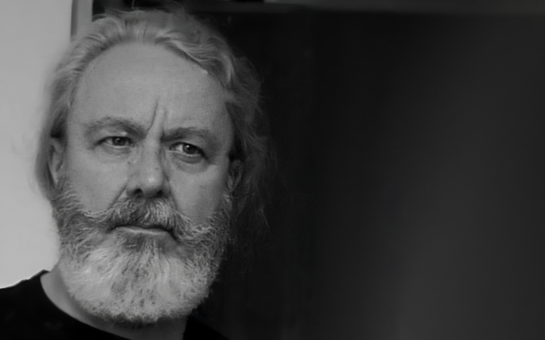
- James Dillon's residency at Musikfestival Bern 2026
- 27th August 2026
- James Dillon will be Composer in Residence at Musikfestival Bern 2026, which will include the world premiere of new work Lamentations: