
Naresh Sohal
1939 - 2018
British
Summary
Naresh Sohal was one of the most distinctive musical voices of his generation. By the time he died in 2018, he had written over eighty works, ranging from large-scale orchestral works with soloist and chorus to intimate and adventurous chamber pieces. His output included two music theatre pieces and a ballet as well as music for popular television series, documentaries and a feature film.
Sohal was born in Punjab in 1939. He soon showed musical aptitude and as a young man led a small ensemble that entertained his peers at public gatherings. His instrument was the harmonica. He developed an interest in composition and began writing waltzes and marches for the Punjab Armed Police Band. Thinking that his destiny might lie in Indian movies, he abandoned his formal education and set off for Bombay. However, having heard Beethoven’s Eroica Symphony on the radio, he changed course entirely.
He arrived in London, UK, in 1962 determined to become a composer of Western classical music. He attended classes in harmony and counterpoint, but felt constrained by what he learned, mindful of the microtonal landscape of his homeland, as well as his own, internal, aural landscape.
He hit his stride when he secured a job as a copyist with Boosey & Hawkes, the music publisher, where he was exposed to scores of every description from which he assimilated much about contemporary compositional technique. He also benefitted from the mentorship of the composer, Jeremy Dale Roberts.
He embraced the avant-garde fully. His early works are experimental in every sense—structure, style and sonority. He quickly came to the attention of the Society for the Promotion of New Music (SPNM) who recognised his unique voice and selected his first major orchestral work, Asht Prahar, for performance by the London Philharmonic Orchestra under Norman del Mar. The work received much critical acclaim and was the springboard for a prolific career.
Sohal’s music has been performed at home and abroad by first-rate artists and ensembles, as well as major orchestras including the BBC Symphony Orchestra and the London Symphony Orchestra; the BBC Scottish Symphony, the Royal Scottish National, the New York Philharmonic, the Israel Philharmonic and the Berlin Staatskapelle orchestras. He received seven BBC commissions two of which were for major pieces for the Proms—The Wanderer and The Cosmic Dance. Maestros Zubin Mehta and Sir Andrew Davis each commissioned two works from him. In 1987, he was awarded a Padma Shree by the Indian Government for his services to Western classical music.
Sohal had an extraordinary musical imagination and was a phenomenal master of orchestral colour. Although he was not an East-West ‘fusionist’ in the sense of aiming to combine the musical conceits of two very different classical music traditions, the insights of Indian philosophy sit at the heart of much of his work. He set texts from the Vedas and the Bhagavad-Gita, and towards the later part of his career, focused on the work of the mystical poets of Punjab.
There are many of his works still to be explored and others that certainly deserve a repeat performance.
The scores of works from the earlier part of the composer’s career are held by WiseMusic.
The composer died on April 30, 2018, aged 78.
Biography
Naresh Sohal was the first person of Indian origin to make a full-time, successful career as a composer of Western music in the Western world. While his works are often based on Indian poetry, philosophical ideas, and texts, the influence of Indian music on his own work was very different from that normally found in ‘fusion’ music as developed by, for example, his contemporary, John Mayer. That Indian musical influence is to be discerned more in Sohal’s willingness to question some of the foundational aspects of compositional practice, such as the ways of subdivision of the octave, and in his choice of pitch classes provided by certain ragas to create original works, rather than in easily identified juxtapositions of Western and Indian elements.
Sohal was born on September 18, 1939 in Harsipind, in the Hoshiarpur district of Punjab, to a family influenced by the teachings of the Arya Samaj, a group devoted to reforms within Hinduism. Over the centuries, the Punjab region has witnessed the confluence of multiple cultures, but Western classical music has never been an important component, since the important centres of European music in India in the nineteenth and early twentieth centuries were places like Bombay (Mumbai), Calcutta (Kolkata), and Goa. Moreover, Sohal’s family was devoted to literature – his father, Des Raj Sohal, was a civil servant and an Urdu poet – but there were no professional musicians among his relatives. Sohal, therefore, grew up interested in a wide range of music played by All India Radio and Radio Ceylon.
Like many young Indians of his generation who were encouraged to study the sciences, Sohal studied physics and mathematics at DAV College, Jalandhar. Here, his extra-curricular interest in music flourished and, as the leader of a small ensemble, he occasionally shared a platform with the singer Jagjit Singh (1941–2011), who later achieved renown as a composer and performer of ghazals.
Shortly before he graduated, Sohal made the decision to devote himself fully to music. He was already playing popular music on the harmonica, composing for the local military band, and performing to distinguished audiences, among them the then-President of India, Dr Rajendra Prasad. He decided to travel to Bombay with a friend who played the guitar to try his luck in the Bombay film industry. He stayed in Bombay for a few months, where he had his first experience of hearing a piece of Western classical music. This was Beethoven’s Eroica Symphony, which he heard in a broadcast on All India Radio. This had a profound effect on him and provided the inspiration for further developments.
The two friends returned to Delhi to audition for a government-sponsored scholarship to study at the Calcutta School of Music. Sohal played Jacob Gade’s Jalousie before a panel that included India’s doyen of Western art music at that time, Vanraj Bhatia. Sohal and his friend returned to Punjab, where the friend abandoned the idea of pursuing a career in music. Sohal, however, was undeterred, and persuaded his father to allow him to leave for England in 1962 in order to study music.
The next eight years were ones of struggle and preparation for great things to come. After a few very difficult months soon after his arrival in England, Sohal became a copyist for the music publisher Boosey and Hawkes. Here he came across avant-garde pieces like Iannis Xenakis’s Eonta. This was a work by a composer who, like Sohal, came from a background in the sciences and who used mathematical elements as compositional tools. This fact intrigued Sohal, who decided to embark upon a more serious course of study than the evening classes he had been taking after his daytime work as a copyist. He gave up his job at Boosey and Hawkes to become a freelance copyist, started taking lessons from composer Jeremy Dale-Roberts, and devoted more time to composition.
In 1965, he completed his first two major scores, Asht Prahar for orchestra, followed by the choral work Surya, for chorus, percussion, and flute. Asht Prahar is based on the Indian division of the day into eight temporal units, four each for day and night. Its sound world explores further some of the paths explored by works as different from each other as Villa-Lobos’s Genesis, on the one hand, and more astringently modernist works like Varèse’s Amériques, on the other. Some passages from Genesis share the inventiveness and unruly exuberance of Asht Prahar, although the latter is harsher harmonically and, unlike the pieces of Villa-Lobos, decidedly goes beyond a post-Romantic idiom. In terms of orchestral colour (including the use of unusual instruments like the ‘typophone’) and the use of a modernist atonal idiom, Asht Prahar displays few affinities with Schoenberg and his followers and is closer in spirit to a work like Amériques. Indeed, Sohal’s characteristic mastery over orchestral colour was widely praised when the work was first performed and published. Even at this early stage of his career, some of his personal characteristics are already evident, such as the turn towards the macrocosmic aspects of nature for inspiration; the tendency to think in terms of large-scale, single-movement musical structures; the use of a wordless soprano voice over and above the timbral palette of the orchestra; and a reluctance to belong to any particular ‘school’ or easily identifiable coterie.
In 1969, the year Sohal became a British citizen, the Society for the Promotion of New Music (SPNM) selected Asht Prahar for a performance (in 1970) at the Royal Festival Hall by the London Philharmonic Orchestra under Norman del Mar. Its success led to a highly productive decade of composition of large-scale works, as well as the receipt of an Arts Council bursary in 1972 that led Sohal to do some research on quarter-tone music under Alexander Goehr at the University of Leeds. Among Sohal’s predecessors, Alois Hába’s name often comes up in the context of the systematic study of microtones, but Sohal was not influenced by Hába’s work. Nor did he know of the works of John Foulds, the first British composer to employ them in his works and who took inspiration from Indian music.
After his time at Leeds, Sohal returned to London, and the early 1970s saw important performances of vocal, chamber, choral, and orchestral pieces by him practically every year. These include premieres of Aalaykhyam II (1972) in February 1973 by the English Chamber Orchestra, conducted by Andrew Davis; Kavita III (1972), composed for the virtuoso soprano Jane Manning and Barry Guy (on double bass), which was taken on an Arts Council tour; the chamber piece Hexad, first conducted by Elgar Howarth; and Dhyan 1 (1974), a work for cello and small orchestra. This last work was premiered by the young and tragically short-lived virtuoso cellist Thomas Igloi (1947–1976) with the BBC Symphony Orchestra under David Atherton, in 1975. The same year, Kavita II was one of the BBC’s entries for the International Rostrum of Composers held in Paris. It was chosen as one of the best ten entries and subsequently broadcast on several radio stations throughout Europe. These works are stylistically quite diverse: the austere soundscape of Dhyan 1, in which Sohal made creative use of his systematic study of quarter tones in Leeds, sounds very different from the exuberant Asht Prahar, while the chamber work Octal (1972) makes use of electronic devices.
The late 1970s saw premieres of largely chamber and vocal pieces, with accompaniment by chamber forces. But in 1982, the composer returned to orchestral composition, now with added vocal and sometimes choral forces.
Both small- and large-scale works followed in the next two decades as Sohal continued to compose well into his seventies. Many of them have more pronounced Indian connections than do his works from the preceding decades. The orchestral piece Satyagraha, commissioned to mark the fiftieth year of Indian independence, and first performed in 1997 at the Barbican by London Symphony Orchestra under the baton of Zubin Mehta, was followed by a Viola Concerto for Rivka Golani (2002), in which Sohal used Indian drums and tabla among the orchestral instruments. The tabla also featured in Three Songs from Gitanjali, settings of three Tagore poems for soprano and string quartet, commissioned by the Spitalfields Festival, and first performed in 2004.
By now, Sohal had started setting texts in Indian languages. The Three Songs from Gitanjali are settings of Tagore’s texts in the Bengali original. The choral-orchestral Hymn of Creation, based on mantras on the theme of creation from the Rig Veda, is set both in English and Sanskrit; while the Songs of the Five Rivers are settings in Punjabi, Sohal’s mother tongue, of poems by the classical Punjabi poets Bulleh (or Bullay) Shah and Waris Shah. The latter piece is unique among Sohal’s output in its strong hints of Indian folk music.
The first performances of both the Bengali- and Punjabi-language settings were sung by soprano Sally Silver (1967-2018), another champion of Sohal’s music who died tragically young. Along with Silver, noted ’cellist Rohan de Saram and pianist Ananda Sukarlan also collaborated with Sohal over a number of chamber works for cello and piano. Excerpts from another work from this period, Songs of Desire, to texts by Tagore, were introduced to Indian audiences by Mumbai-born soprano Patricia Rozario. The whole cycle was later performed in its entirety in the UK by Sally and Jeremy Silver.
Sohal’s next large-scale work, The Divine Song, for narrator and orchestra, was based on the first two chapters from the Bhagavad Gita, which itself is a part of the Indian epic The Mahabharata. The chosen text deals with the concepts of Atman (the self), Dharma (duty), and Punarjanma (reincarnation). The piece was commissioned by Zubin Mehta for his seventieth birthday in 2006 and first performed in Tel Aviv by the Israel Philharmonic Orchestra in 2010, with the narration in Hebrew; there were subsequent performances in the same year in Jerusalem and Tel Aviv, and the performances were recorded on video. The idea of having a narrator rather than a singer was suggested by Mehta himself, and this means that, with a little effort on the part of a translator, the work can be performed in any language. Three basic themes are employed: one associated with war, and the other two with Krishna (using the pitch classes of raga Bhairavi) and Arjuna (using the pitch classes of raga Bhairav). According to the composer’s programme note, the piece is organised as follows:
Structurally, the piece is in the shape of two arches. The conch shell is blown to start the proceedings. Then follows battle music—Arjuna’s dilemma—battle music—Lord Krishna’s discourse and battle music again. The conch shell is blown once more to end the piece.
Sohal’s last large-scale orchestral composition was The Cosmic Dance, commissioned in 2011 and first performed at the 2013 BBC Proms by the Royal Scottish National Orchestra, with Peter Oundjian conducting. In this piece, Sohal returns to the cosmic theme that underpins a number of his major works. According to the composer, The Cosmic Dance is inspired both by modern science and by Hindu philosophy. The work opens with a musical exploration of time before the Big Bang took place; for his inspiration, Sohal goes back to the Rig Veda, in which it is stated that in the beginning, there was the non-being, which remains forever; it forms the idée fixe of this piece. This movement is labelled ‘Unmanifest’, and it is followed by 'Big Bang and Aftermath’, ‘Galaxies Disperse’, ‘Milky Way’, ‘Sun’, ‘Moon’ and ‘Earth’. Although there is a return to the ‘Unmanifest’ theme, the closing section does not echo the opening material as closely as is the case in Asht Prahar.
The Cosmic Dance is stylistically eclectic and incorporates in its later stages elements that are normally not to be found in Sohal’s output. It opens with a haunting theme for a solo saxophone over hushed strings and gradually unfolds to incorporate harmonically dissonant and rhythmically agitated passages, often scored for brass or strings, both elements that are characteristic components of his large-scale orchestral works. What is less usual is the presence of some more overtly tonal elements, such as a waltz melody, a lyrical duet for violin and cello and a solo violin passage that comes near the end of the piece, all of which are somewhat reminiscent of the closing sections of Richard Strauss’s Also Sprach Zarathustra.
In some ways, then, the trajectory of Sohal’s development from being a composer of microtonal, abstract music with unusual timbres, through a period of neo-Romanticism, to a deeper engagement with non-Western languages and musical idioms, reflects some of the major shifts that have taken place in the latter half of the twentieth century in the world of Western music. Yet, there are underlying features that unify Sohal’s music and make it distinctively, and uniquely, his own. It must also be remembered that, unlike Chinese, Japanese, or Korean composers, Sohal had little institutional support from India, where Western music, unlike Western cinema, film, or the visual arts, has never had any significant popular base, especially in the post-Independence era. In the light of the very considerable limitations within which Sohal had to work, his ability to create a body of large-scale works is a remarkable achievement in itself.
Sohal’s best works, in this writer’s opinion, are in the fields of orchestral music and large-scale choral-orchestral works, categories that dominate his output. The best of his works deserve to be better known, through more performances and commercial recordings. This Indian-born composer of Western music produced a rewarding body of music till the time of his sudden and unexpected death from a massive heart attack in London on April 30, 2018.
Surprisingly, there is no scholarly work and little critical literature on Sohal despite his unique body of work and the fact that his music has been performed by some of the leading orchestras and soloists on both sides of the Atlantic. This article is based on personal interviews with the composer in 2012 and 2014. My assessments of his works, which in some cases differ from the composer’s own, are entirely my own.
- Suddhaseel Sen
October 2022
Suddhaseel Sen holds PhDs in English from the University of Toronto and Musicology from Stanford University. He is Associate Professor in the Department of Humanities and Social Sciences, IIT Bombay.
For more information on the composer’s life and work, visit his website here.
Toccata Classics have released new recordings of his piano music and string quartets.
Heritage Records have released a wide variety of remastered recordings of original performances of orchestral works and vocal and instrumental music:
Naresh Sohal: Vocal & Instrumental Music
Naresh Sohal: Lila & Violin Concerto
Naresh Sohal: The Wanderer & Asht Prahar
News
Performances
Features
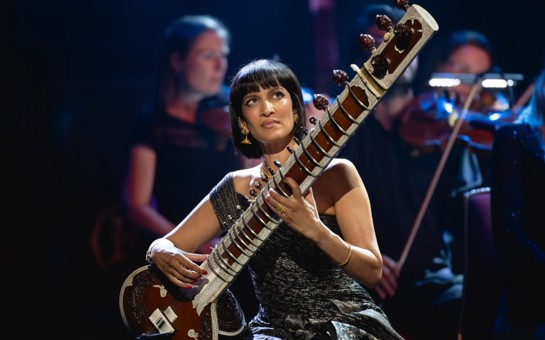
- Celebrating 80 years of Indian independence
- Celebrating 80 years of Indian independence in 2027, Wise Music have been re-exploring the works and composers hailing from and influenced by India and its culture.

- Dual Identity as a Composer: Naresh Sohal interview
- Naresh Sohal died on 30 April 2018, aged 78 and this interview between Sohal and Suddhaseel Sen is a transcript compilation from interviews that took place in 2012 and 2014.

- Inspirations from India
- Nowhere in the world is quite like India when it comes to the sheer vibrancy and variety of the country’s sights and sounds. In anticipation of the 75th anniversary year of Indian Independence (August 15, 2022 – August 15, 2023), we’ve been re-exploring the works and composers hailing from, and influenced by, India.