
 Located in the UK
 Located in the USA
 Located in Europe
- Sidney Corbett
Incompleteness (what we can not express we still can know) (2025)
(for ensemble)- Henry Litolff’s Verlag GmbH & Co. KG (World)
- 1(afl,bfl,pic).1(ca).1(bcl).0/perc/pf.hp/va.vc.db (percussion instruments: Plattenglocke in B, Tamtam, Vibraphon, Triangel, Schlitztrommel Holzblöcke (4), Schellenglocke)
- 12 min
Programme Note
Albert Einstein was quoted as saying that the only reason he still went to the Center for Advanced Studies at Princeton was to have the chance to walk there and back with Kurt Gödel. Gödel's Incompleteness Proof ranks, along with Einstein's Theory of General Relativity and Heisenberg's Uncertainty Principle as one of the three paradigm shifting scientific theories of the 20th century. Gödel - logician, mathematician and philosopher - proves in his postulates that things can be true but not (within the system) provable.
Of course, in and of itself, none of this has anything to do with music. But music is, among other things, thought. And in thinking about the choices we make in writing music, I was inspired by the openness implied in Gödel's theory.
His idea that there are things which elude our formal conception yet are true, exist, are "out there.." is something I have felt all my life. As with Wittgenstein's famous conclusion to his Tractatus, that we must simply be silent concerning things that can not be said, Gödel also points to these things hidden from direct perception that are nonetheless real.
More Info
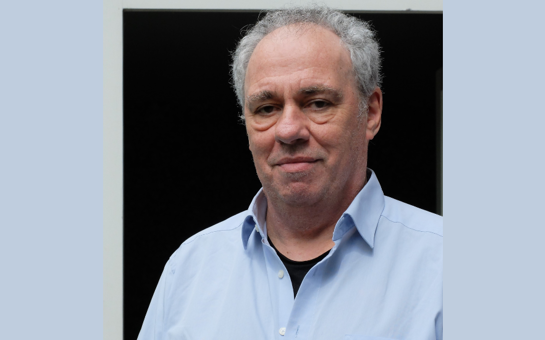
- World premiere of Sidney Corbett’s Incompleteness
- 14th January 2026
- Incompleteness (what we can not express we still can know) is the latest work for ensemble by composer Sidney Corbett. It will receive its world premiere on January 21 by ensemble risonanze erranti and Peter Tilling at Schwere Reiter Munich.