
 Located in the UK
 Located in the USA
 Located in Europe
- Piers Hellawell
The Rising of Sirius (2025)
(Work for Clarinet in B flat, Violin, Cello and Piano)- Peters Edition Limited (World)
Commissioned by Robert Plane and the Gould Piano Trio, with funding from Corbridge Chamber Music Festival, Vaughan Williams Foundation, Leche Trust, Hinrichsen Foundation and contributors to the Corbridge Chamber Music Festival ‘Buy a Bar’ Scheme.
Commissioner exclusivity applies
Programme Note
To know another human, as we know ourselves, is not given to us. To know a human who lived 1300 years ago is so far beyond our gift that we can only speculate about the sorts of lives lived back then, overwhelmed by our lack of a picture as to how life was experienced. So this assignment, in which a composer marks the life and achievement of St Wilfrid, soon turned away from speculation about the saint himself, and sought solidity in the two tangible attributes that we have: Wilfrid’s journeyings, and his buildings.
Music shares with travel that it unfolds in time; while composers nowadays have more often shown an interest in negating the sense of time’s unfolding, it is still possible for a work to project a conscious sense of ‘travel’, and this quartet seeks some sense of a pilgrimage, with a sustained tread. This does not describe Wilfrid’s incredible travels to and from Rome, but they did provide the starting point; a micro-version of this journey lies in the progression within a church, as we go from west – the temporal, earthly – to east, with its altar representing the heavenly.
The layout of a building, meanwhile, if harder to replicate in the realm of sound, at least offers a very particular model: it interests me that by the time Wilfrid was building at Corbridge, Hexham and Ripon, the ground plan that we know as standard for a Christian place of worship, based upon the Cross, was (my limited studies suggest) already established. The ‘geography’ of my quartet is accordingly shaped by it: we progress, along a ‘nave’ and, in parallel, aisles – places of greater activity, I imagine – before meeting at the Crossing, the cruciform central point. This is an actual meeting place in the piece: I feel that early bishops and their works were not remote figures, and nor should works of music be remote, as too often they are, from listeners. Therefore at this point, in some performances, the audience can be invited to intone short phrases, led by the performers, as the piece stands at its central point, in an act of communal music-making. The work then ‘explores’ the Transepts before we move on into the Choir for the final section..
I cannot adequately thank Rob Plane and the Gould Trio for their unwavering belief in, and enthusiasm for, this project. Thanks to them, the work’s planning itself became a very creative pilgrimage.
PH © 2025
More Info
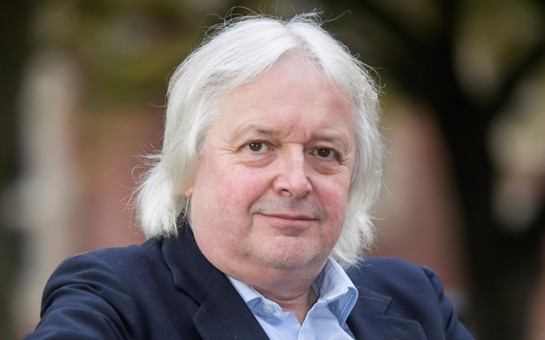
- Piers Hellawell's 'The Rising of Sirius' to premiere this weekend
- 24th July 2025
- This Saturday Piers Hellawell's 'The Rising of Sirius' for clarinet and piano trio will be premiered at Corbridge Chamber Music Festival.