“Joubert’s music is unfailingly inventive, impassioned yet serene, and always exquisitely crafted.”
Gramophone
March 2027 will mark the centenary of the birth of John Joubert.
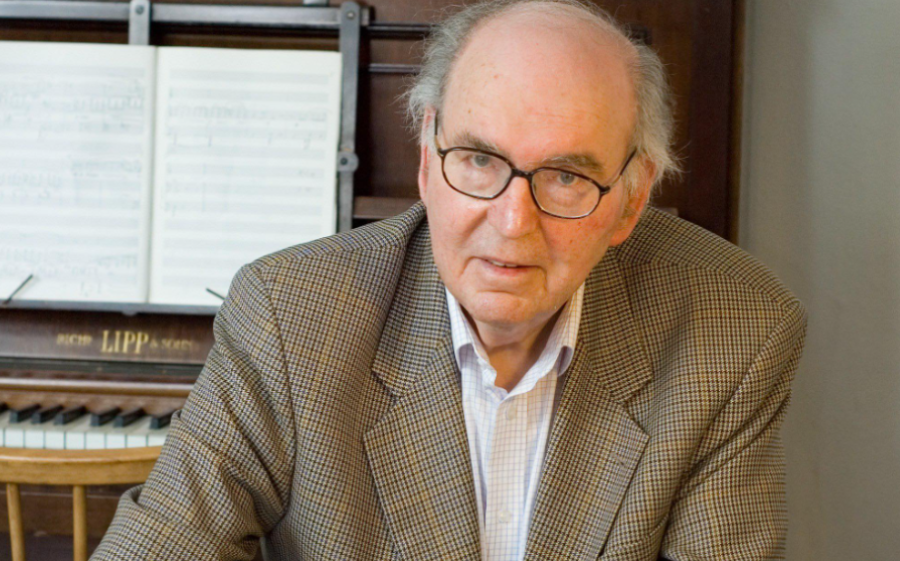
Joubert composed over 180 works in his lifetime, including three symphonies, four concertos and seven operas and enjoyed a highly distinguished career as a choral composer. He was born in Cape Town in 1927. At the age of 19 he won a scholarship to study at the Royal Academy of Music in London and lived and worked in England for the rest of his life.
Joubert's long composing career encompassed all genres from symphonic, operatic and chamber works to the ever-popular choral miniatures, Torches! and There is no rose. The three symphonies, three string quartets, Oboe Concerto and Cello Concerto are recent additions to a growing catalogue of recordings from across his work list.
An English Requiem was commissioned for the 2010 Three Choirs Festival and Concerto for Cello and Chamber Orchestra for Raphael Wallfisch as part of the 2012 Cultural Olympiad. Joubert was the featured composer at the new music wells 73-13 festival in June 2013 which included a new mass setting and anthem for the choir of Wells Cathedral.
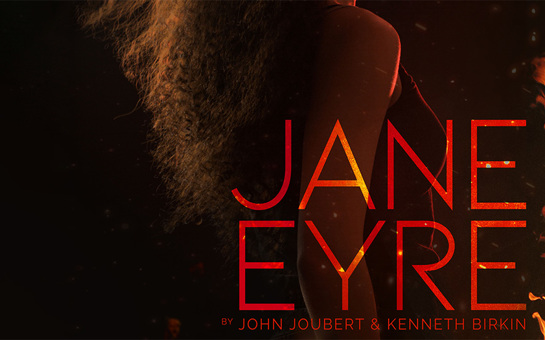
In 2016 two major premieres took place: the substantial St Mark Passion at Wells Cathedral and his opera Jane Eyre - recorded live for Somm as one of several new releases to mark his 90th birthday in 2017. Jane Eyre was subsequently staged in a new production by Green Opera in 2025.
John Joubert died on 7 January 2019. His final piece was The Right Human Face, the first part of an intended song cycle on the theme of marriage, which was published posthumously in 2022.
SELECTED WORKS
Symphony No. 2 (1970), 21 mins
Inspired by the tensions brought about by the Apartheid system of government in his native South Africa and the example of Alan Paton’s great novel Cry the Beloved Country, Joubert’s Symphony No 2 unfolds in a single, continuous movement divided into two main sections: one slow, one fast. Heart breaking, elegiac passages confront violent orchestral interjections - music drawn from traditional African melodies, most noticeably in the doleful Zulu lament for solo horn in the second section.
South of the Line (1985), 29 Mins
The five poems which constitute the text of South of the Line were written by Thomas Hardy at the turn of the century in response to the outbreak of the Anglo-Boer War. They reflect the considerable body of opinion in this country which was against the war, and contain some of the most powerful expressions of anti-war sentiment to be found in English literature. This rewarding, substantial work is scored for SATB choir, timpani, percussion, two pianos and soprano and baritone soloists and is one of John's most important choral works.
String Quartet No.2 (1977), 29 mins
This work draws upon an alternate spelling G-E-G sharp the three-note "Muss es sein?" motif from Beethoven's last quartet, Op. 135, creating an ambiguous E minor-major connotation throughout. Later the quartet quotes Shostakovich's motto ‘D-E flat-C-B’ in a movement dedicated to the composer and revisits material featured in Joubert first quartet. Both works are dedicated to his wife. String Quartet No 2 is a masterclass in the manipulation and development of themes.
Temps Perdu (1984), 22 mins
Joubert’s work for thirteen solo strings was inspired by Marcel Proust’s sequence of novels, À la recherche du Temps Perdu, particularly Swann’s Way, which deals with the narrator’s childhood and adolescence. Joubert did not wish to recreate Proust in terms of music, but explore the concept of memory in his own work. Delving into his own juvenilia, he reworked and extended an unnamed string piece which often quotes Saint-Saëns’ Violin Sonata in D minor.
An English Requiem (2010), 45 mins
An English Requiem unashamedly models itself on A German Requiem by Brahms, but rather than simply serving as liturgy it is more accurately described as a mediation on death itself. This six-movement work for boys choir, chorus and orchestra sets texts from both the Old and New Testaments and was commissioned by the Grimmitt Trust for the 2010 Gloucester Three Choirs Festival. The Times wrote that ‘one could easily imagine Elgar, VW, Howells, Britten and Walton nodding their heads in approval (and, perhaps, recognition) as Joubert’s majestic climaxes, astringent harmonies and poignant melodies echoed around the Gothic arches’.
St Mark Passion (2015), 45 mins
Joubert’s St Mark Passion for 2 tenors, 3 baritones, SATB chorus, cello and organ was first performed in Wells Cathedral on Palm Sunday 2016 on the composers 89th birthday. Familiar English hymns take the place of chorales providing the opportunity for the congregation to join the performance.
If you or your ensemble are planning a performance of Joubert's work for the centenary of his birth in 2027, please let us know via email at promotion@wisemusic.com.