
Khachaturian - Iconic Ballets to Orchestral Brilliance
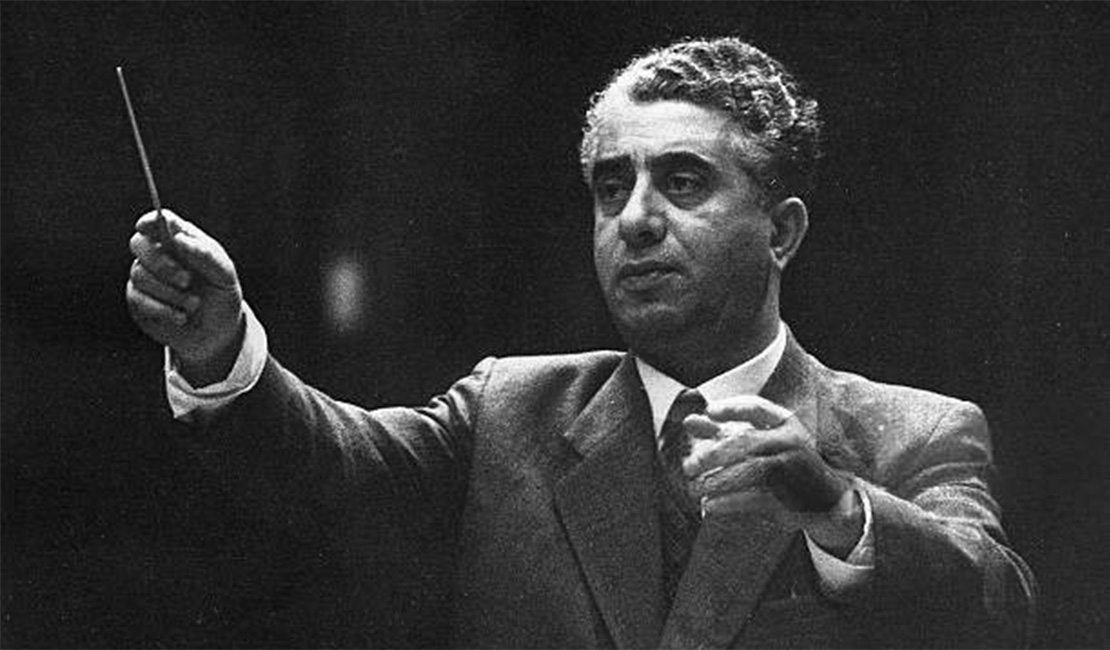
Born in Tiflis (Georgia) in 1903, Aram Khachaturian developed a style that is recognisable throughout the world. His mastery lies in a blend of symphonic grandeur combined with Russian tradition imbued with the colours and harmonic modes of both Armenian and Caucasian folklore. It is this particularly bold musical identity that has ensured that his work still resonates in 2025.
Although his name is inextricably linked to the two ballets Spartacus and Gayaneh, from which the famous Sabre dance is taken and whose reputation is well established. Nevertheless, Khachaturian's catalogue extends far beyond these two pillars of the classical repertoire.
‘When the name Khachaturian is mentioned, the Sabre Dance immediately comes to mind. This may be pleasant, but it hurts a little too.’
(Aram Khachaturian)
Behind the rhythmic character of his work lies a lyrical universe and, at times, an intimacy as healing as it is unexpected. Khachaturian offers a deeply dichotomous palette of emotions, ranging from pure exaltation to tender, introspective melancholy.
The Violin Concerto (1940) is the recognised masterpiece that perfectly illustrates this duality. Between virtuosity and almost elegiac melodic tenderness, Khachaturian demonstrates the bipolarity of his emotional palette and places this work among the greatest concertos of the 20th century. And finally, this emotional crossover can be interpreted as a reflection of his various influences.
“A distinctive and inseparable blend of Russian romanticism and Eastern modes and harmonies.”
(Erica Jeal, The Guardian).
Although often associated with dance, Aram Khachaturian's orchestral legacy is currently being rediscovered. From incidental music for plays such as Masquerade to piano pieces evoking scenes from Armenian life, his colourful repertoire is a goldmine for orchestras and music lovers who wish to experience a living, timeless body of work.
With Khachaturian's music remaining a bold, colourful and universal source of inspiration for movement, Wise Music Group are delighted to present a brief overview of the best- and lesser-known works from his catalogue, which sometimes stray from the beaten track and offer new opportunities to rediscover his work. It has been compiled into an eclectic Spotify playlist, which we hope will inspire more wonderful dances for decades to come.
Adagio of Spartacus and Phrygia, from Spartacus. Suite No. 2 (1955)
3(pic).2+ca.2+bcl.2/4.3.3.1/timp.perc.xyl/tubaphone.cal.hp.pf/str
Duration: 9’
Famous for its passionate lyricism, iconic since the recording by the Wiener Philharmoniker Orchestra at Victoria Hall in Geneva (1966) conducted by Khachaturian himself. This work has gained new notoriety, notably thanks to a recent transcription for piano by E. Khachaturian recorded by the prestigious pianist Jean-Yves Thibaudet.
Masquerade Suite (for orchestra) (1944)
2(pic).222/4231/timp.perc/str
Duration: 17’
This work has recently been performed by prestigious ensembles and orchestra such as the United States Navy Band ‘The President's Own’ (2016), The Dallas Opera conducted by Emmanuel Vilaume (2025), and most recently the Orchestre National de Lyon under the baton of Vincent Balse (2025), demonstrating the enduring appeal of this romantic work.
Lullaby for violin and piano (1926)
vn / pf
Duration: 5’
Aram Khachaturian's Lullaby for Violin and Piano (1926), although little known, has recently gained international exposure thanks to the acclaimed album Aram & Karen Khachaturian: Music for Violin and Piano, released in 2018 and performed by violinist Ruben Kosemyan and pianist Natalya Mnatsakanyan.
Sonata for violin and piano (1932)
vn/pf
Duration: 18’
This youthful sonata was composed by Khachaturian shortly after graduating from the Moscow Conservatory. It offers a fascinating insight into the evolution of his style. Although less frequently performed than his so-called ‘mature’ works, it has recently attracted the attention of researchers and performers, particularly following the recording and concerts given in 2022 by violinist Armen Aghajanian and pianist Karine Hakobyan, who highlighted the rhythm and folk melodies of this work.
Concerto for Violin and Orchestra (D Minor) (1940)
2+pic.2+ca.2.2/4.3.3.1/timp.perc/hp/str
Duration: 35’
Dedicated to the great violinist David Oistrakh, who gave the world premiere on November 16 1940. This concerto is famous for its virtuosity and rhythm, characteristic of Khachaturian's work. The work was an immediate international success, quickly becoming part of the standard repertoire, who also won the Stalin Prize in 1941.
Concerto for Piano and Orchestra (D-flat Major) (1936)
2(pic).2.2+bcl.2/4.2.3.1/timp.perc/str
Duration: 32’
This concerto, dedicated to pianist Lev Oborin, was Khachaturian's first to gain international renown. It is best known for the distinctive and haunting sound of the flexatone (often replaced by a musical saw or omitted) in the second movement, Andante con anima.
Concerto for Flute and Orchestra (Rampal version) (1968)
3.3.2.2/4.3.3.1/timp.perc/hp/str
Duration: 36’
As mentioned above, this work is a transcription of the composer's famous Violin Concerto in D minor (1940), made at his request by the renowned French flautist Jean-Pierre Rampal in 1968. Rampal completely reworked the solo part to adapt it to the capabilities of the flute and added his own virtuosity to the first movement, while the orchestral accompaniment remains largely the same. This arrangement transposes the folk passion and techniques of the original work, entering the flute repertoire while retaining its status as a major concerto.
Discover more highlighted works from Khachaturian in the brochure below.