
 Located in the UK
 Located in the USA
 Located in Europe
- Hania Rani
Shining (2025)
- Bosworth Music GmbH (World)
- 1(I:afl).0.1(+bcl).1/1.0.0.0/2pf(I/II:2epf)/str(2vn.va.2vc), click track required
- 35 min
Programme Note
Shining is a piece composed and arranged with a 12-piece ensemble in mind. It is informed directly by works for similarly sized ensembles composed by Steve Reich or Philip Glass, but also other pivotal figures of minimalistic music of the 20th century — Feldman, Cage or Riley. In fact, it is an attempt to enter a transhistorical dialogue, using the medium of ensemble to propose a potential form of continuity, which I'm always interested in. However, those inspirations might seem obvious for a musician like me. I don't have much in common with them, especially historically, aesthetically or even in terms of my musical education, which successfully diminished their role in the arena of contemporary music while I was still a classical music student. It was not until my first visits outside of the European mainland — to the UK and US — that I was introduced to those names and their manifestos, which back then felt pleasantly inconceivable and exotic. Learning a new language in a conscious way is a fascinating yet tedious process — each step is made carefully and slowly, and the results seem precarious to hold. And although we try to refuse any traces of other influences, they infuse and permeate the whole structure with a flavour of exercised, automatic gestures. This is what we could call the art of translation, which inevitably obscures some parts but simultaneously enhances something previously invisible. Ultimately, it produces new qualities and reenacts the simple state of “existing” — by simply doing it again! This is what I sometimes wonder about in my own composing process — which started early but on a very unconscious level, yet was developed seemingly recently, and this process is still continuing.
Shining came to me not as music first but as a text, suggested to me by a friend. I bought the book during lunch in April 2025 and read it in one go later in the evening in my apartment. It wasn't one of those books that feels like a dear friend, returning a missing rib back to your body. It was slightly annoying and terrifying, definitely bizarre and completely captivating. A Shining by Jon Fosse, translated from Norwegian to English by Damion Searls, is a singular piece of writing that doesn't remind you of anything else. It tells the story of a man getting lost in a forest during the night. It is written in the style of a stream of consciousness, in the first person, distributed over 42 pages, without any pause or stop. It's breathless, fleshly, always moving ahead and extremely musical. Oddly phrased sentences, sometimes incredibly short, recurring repetitions and reappearing words resemble musical rhythms and patterns — not “well-behaving” and polished, but rather wild, unpredictable, free as the human mind should be. Yet the form of the book and its relentlessly progressing narration hold everything tightly together, pulling the entire construction patiently forward. After reading it for the first time, I thought that it would be curious to see someone adapt it into a piece of contemporary dance, film or a video installation. Around the time I was thinking of composing a longer piece of music for a larger ensemble that would use the element of duration as one of the formative aspects. It also coincided with my receiving an invitation to present Non Fiction at the Barbican, to celebrate the album premiere, which really made me want to write something new especially for this occasion. I reminded myself of ‘A Shining’, which I'd been ruminating about since reading it, yet at the time not considering translating it into a score, into a piece of music. I thought that it was a weird serendipity and that instead of waiting for someone else's interpretation of the book, I would examine it myself. The most intriguing and difficult part of composing music for me is inhabiting unconventional time units. It's easier to imagine a minute or three nowadays than forty of them. What does it even mean anymore? How much is plausible to render during a stretch of 40 minutes or, flipping the question, how many minutes do we need in order to experience certain things? I assumed that it would take at least 30 minutes to notice the effect of duration but also to use duration as a musical element, which influences other aspects of the composition. This is also long enough for a listener to feel it in their body through confusion, impatience, boredom or disorientation. This reminds me of a comment I received after one of the listening sessions we did around the release of the recording of Non Fiction, when a young man came to me and said he had so many images in his head after listening to the piece that he wondered if I was planning to add a visual aspect to the composition. I realised that listening to instrumental music nowadays, without flashing lights or visuals, is a shocking stimulation for our brain, which doesn't know what to do with all this imagination that is not immediately translated into the set of images imposed by social media. I told him that it's alright to create images in his head and leave them there safely and privately.
I wanted the piece to depend on stable pulsation (60 bpm), but in order to make it less direct, the music shifts from duple to triple meter, which gives an impression of a faster tempo (80). This allowed me to achieve one solid timeline on which I could position irregular elements and motifs. This is how I established a variety of themes presented in different configurations throughout the piece, especially the opening chords played by bass clarinet, bassoon and horn, broken by glimpses of disconcerting moments of silence. This theme is later repeated frequently in versatile arrangements and settings, often locked in the same key, yet placed each time in a completely different environment, which allowed me to expand the tonality of the piece to a level unknown to me before. Another prominent element is fast ostinato, which speaks to concepts developed by Reich or Glass, but also earlier by Vivaldi, Bach or Schubert. In Shining, what is novel is that I place them into a new harmonic context, not by shifting from harmony to harmony but by expanding its tonal scope and adding extra layers, often in a totally different key or tuning, which takes unnecessary weight off them and moves the focus to their “texture” (because the ostinatos are too swollen with meaning to act here solely as a perpetuum mobile). This enabled me to mark other elements, already familiar to my music — free-in-time and sonoristic solos of single instruments — but also to realise an effect of two (or sometimes three) simultaneously running timelines, each moving in a slightly different pulsation or time. They are not perfectly synchronized, but are set in the same context and space, which I find a very interesting phenomenon to observe aurally. Another technique that I explored in this piece is introducing singing while playing — not to present new musical material (because the singing parts usually follow the lines played on instruments) but rather to expand even more the tonality and texture of the piece. The human voice has not only its own unique frequency range, but because it includes the physical aspect of breathing, it is able to create additional rhythmic figures. The piece is arranged for a string quintet (with two cellos), a woodwind quartet (flute, clarinet, bass clarinet, bassoon), horn, two grand pianos and two other keyboards, to be performed without a conductor and with no break or stop for the entire 39 minutes.
© Hania Rani 2025
Reviews
More Info
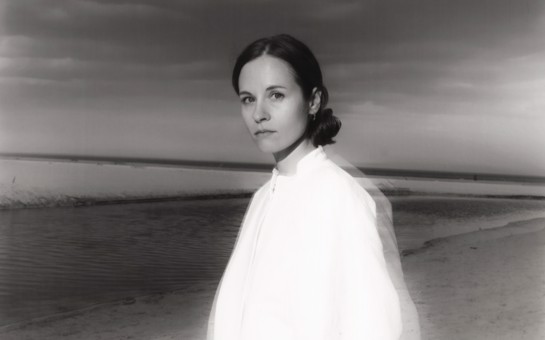
- Hania Rani’s Non Fiction to receive World Premiere at the Barbican
- 17th November 2025
- The world premiere of Non Fiction: Piano Concerto In Four Movements by pianist, composer, and vocalist Hania Rani will take place on November 25 at the Barbican in London.