

 US/UK Customers
 Located in Europe
 Digital download
- Sarah Kirkland Snider
Hildegard (2025)
- G Schirmer Inc (World)
Commissioned by Beth Morrison Projects and the Aspen Music Festival and School with additional commissioning support by William Kennedy. Developed and produced by Beth Morrison Projects
Unavailable for performance.
- fl, cl, bn, hp, str quintet
- 3 Sopranos; 1 Mezzo-soprano; 2 Tenors; 2 Baritone
- 2 hr 5 min
- the composer after Hildegard von Bingen
- English, Latin
Programme Note
Synopsis
The year is 1147. Hildegard von Bingen is Magistra and Physician of Disibodenberg Monastery in Rhineland-Palatinate, Germany, where–at grave risk of ex-communication– she has begun transcribing her visions of God in the hope of obtaining Papal approval to write her theology. When the artistically-gifted novitiate Richardis von Stade arrives at Disibodenberg seeking asylum from her novitiate at Brauweiler Abbey, where she was beaten for her epilepsy, the two women develop a profound partnership. Believing that Richardis's talent for drawing and painting is divine and that practicing it will help her recover, Hildegard enlists Richardis to illustrate her visions, dramatically enhancing their meaning while repairing Richardis's health and sense of self. However, a conflict with Hildegard's superior costs her and her daughters the right to make music, underscoring Hildegard’s fundamental lack of agency in the patriarchal monastic culture. Hildegard seeks to create a women-only Abbey where she and her daughters can freely pursue their spiritual, intellectual, and artistic goals. As they await Church approval for Hildegard’s visions, the love between Hildegard and Richardis becomes impossible to ignore, and an unforeseen crisis threatens both their hard-won accomplishments and the intimacy – in all its complexity and secrecy – that has become their salvation.
A tale of two gifted women struggling to find their voices in a time and place where female voices were forbidden, HILDEGARD is a story of love, awakening, and devotion in the face of doubt. It is about the desire for connection – to humanity, to spirituality – and the competing conflicts therein. It is about the struggle to be good, and what gets lost along the way.
I chose to write the libretto myself, based on Hildegard von Bingen's writings, so that I could develop the text and music simultaneously. For the past eight years, I've extensively researched Hildegard's life and work, including traveling to her Abbeys and the town where she was born in Germany and developing a close relationship with Hildegard scholar, Barbara Newman.
Traditionally, opera has not been an art form that tells stories of strong, accomplished women. I believe the operatic repertoire will offer a deeper, more nuanced, more relevant view of humanity if it does this. Hildegard's story shines a light on the past while illuminating our present day, as the challenges Hildegard and Richardis faced – discrimination, oppression, repression – are surprisingly resonant today, almost nine hundred years later.
With Hildegard von Bingen's own words and music as inspiration, HILDEGARD the opera strives to paint an intimate, affecting portrait of two fascinating women that is musically powerful, visually striking, narratively captivating, timely, and relevant.
- Sarah Kirkland Snider
Scores
Features
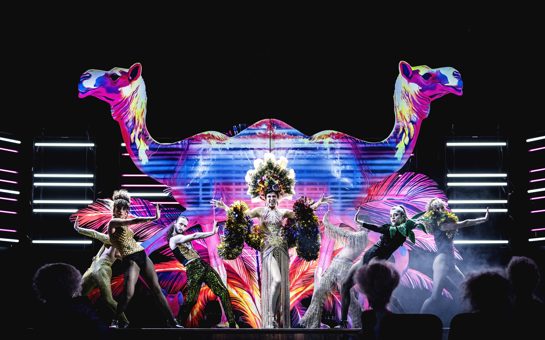
- Opera Season Highlights 2025-26
- Discover operatic highlights from Wise Music Classical during the 2025-26 season test
Reviews
More Info
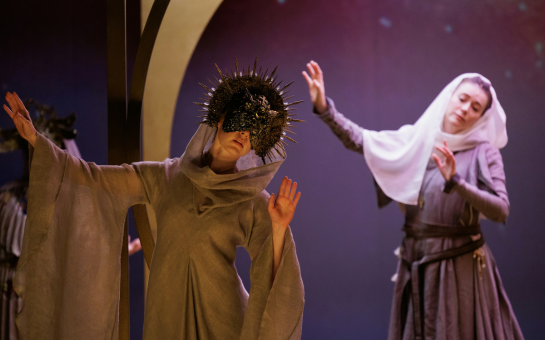
- Sarah Kirkland Snider’s Hildegard Debuts in New York at PROTOTYPE Festival
- 7th January 2026
- From January 9–14, 2026, the visionary opera Hildegard by composer and librettist Sarah Kirkland Snider receives its New York premiere as part of the PROTOTYPE Festival, presented at the Gerald W. Lynch Theater at John Jay College.

- Sarah Kirkland Snider's First Opera 'Hildegard' Premieres in Los Angeles
- 14th October 2025
- On November 5–9, 2025, Los Angeles Opera, The Wallis, and Beth Morrison Projects present the world premiere of Hildegard, the first opera from composer and librettist Sarah Kirkland Snider.