
Screen to Concert Hall: Burgon's Television Music
From Screen to Concert Hall: Geoffrey Burgon's Television Music
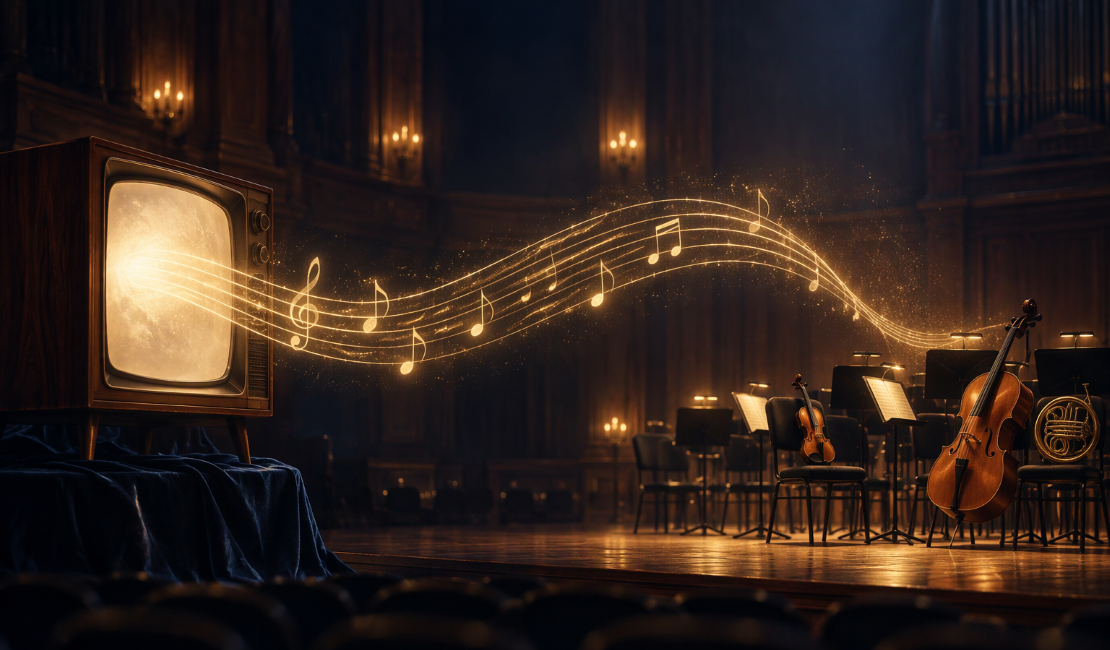
Few British composers have created television music with quite the distinctive voice of Geoffrey Burgon. His scores for Brideshead Revisited, Tinker Tailor Soldier Spy, the BBC’s Bleak House and the The Chronicles of Narnia have become inseparable from the dramas they accompanied. Yet heard away from the screen, this music reveals another identity: lyrical, finely crafted orchestral writing that belongs just as naturally in the concert hall.
Burgon's association with television encompassed some of the defining British dramas of his generation. Tinker Tailor Soldier Spy appeared in 1979, Brideshead Revisited in 1981, and his work on the BBC's adaptations of C. S. Lewis stretched from The Lion, the Witch and the Wardrobe in 1988 through Prince Caspian and the Voyage of the Dawn Treader in 1989 to The Silver Chair in 1990. The 1985 television adaptation of Bleak House offers another compelling example of his gift for bringing literary worlds to life through music.
What connects these very different worlds is Burgon's remarkable economy of musical means. His television music rarely overwhelms a scene. Instead, melody, instrumental colour and carefully judged harmony establish atmosphere and character with extraordinary immediacy.
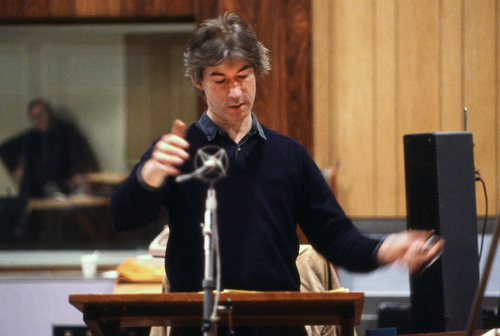
Burgon himself conducted the Philharmonia Orchestra in a 1992 recording devoted to his television scores, bringing together music from Brideshead Revisited, The Chronicles of Narnia, Tinker Tailor Soldier Spy, Testament of Youth and Bleak House.
More than three decades later, that collection makes an eloquent point. These are not simply soundtracks to familiar images. They are concert music born from television, and some of the most distinctive orchestral music to emerge from the golden age of British television drama.
Brideshead Revisited
The sumptuous world of Evelyn Waugh's Brideshead Revisited inspired perhaps Burgon's most famous television score.
Written for Granada Television's landmark 1981 adaptation, the music captures both the elegance of Brideshead and the profound sense of memory and loss running through the story. Burgon's score earned him an Ivor Novello Award that year.
In the concert hall the music becomes the 18-minute Brideshead Variations, a sequence of six movements for chamber orchestra. The six sections trace a miniature dramatic arc: Brideshead Revisited, Julia, Julia's Theme, The Hunt, Fading Light and Farewell to Brideshead.
Released from the images for which it was conceived, the score's melancholy and refinement come into sharper focus. The result is not merely a collection of television themes, but an evocative orchestral portrait in its own right.
The main theme has remained ever-popular. The soprano Lesley Garrett recorded a version Ave Verum in 2008, and subsequently All Angels released their own recording too. This is also available on sale for performance, arranged for SSA and piano. See here.
Hire Brideshead Variations for Chamber Orchestra
The Chronicles of Narnia
A very different sound world emerges in Burgon's music for the BBC's The Chronicles of Narnia. Beginning with The Lion, the Witch and the Wardrobe and continuing across the subsequent BBC adaptations, Burgon created music capable of suggesting wonder and fantasy without sacrificing the intimacy of C. S. Lewis's storytelling.
The resulting concert suite lasts around 14 minutes, with movements including Aslan's Theme, The Great Battle, Mr Tumnus' Tune, The Storm at Sea, Aslan Sacrificed, The Journey to Harfang and Farewell to Narnia. Again, Burgon's relatively compact orchestral forces become part of the music's personality.
It is striking how effectively Burgon creates a whole fantasy landscape without relying upon sheer orchestral scale. His Narnia is colourful and magical, but also intimate, mysterious and unmistakably human.
Hire The Chronicles of Narnia: Suite for Chamber Orchestra
The Forsyte Saga
The music for Granada Television’s 2002 adaptation of The Forsyte Saga brings lyrical warmth and quiet unease to John Galsworthy’s family chronicle. Waltz rhythms, expressive piano writing and finely shaded orchestral colours, reminiscent of the elegance of its period setting, whilst also suggesting the tensions beneath its polished surface. At the score’s heart are Irene’s Song and June’s Song, heard in both instrumental and vocal forms, with Bryn Terfel and Sissel featuring on the soundtrack recording conducted by Burgon himself. By turns intimate, wistful and dramatic, the music extends the distinctive melodic voice familiar from Brideshead, demonstrating the composer's enduring ability to illuminate character through music that rewards listening beyond the screen.
Testament of Youth
Burgon’s music for the 1979 television adaptation of Testament of Youth brings a poignant intimacy to this story of a generation shaped by the First World War. Recast in 1991 as a ten-minute concert suite for string orchestra with optional timpani, the score unfolds in four movements: Main Theme, Intimations of War, Elegy and Finale. Their progression from the main theme through foreboding and mourning gives the suite a concentrated dramatic shape, allowing the music to speak beyond its original screen setting. Alongside Burgon’s better-known television scores, Testament of Youth offers string orchestras a compact and evocative addition to the concert repertoire.
Hire Testament of Youth: Suite for string orchestra.
Tinker Tailor Soldier Spy
If Brideshead is defined by nostalgia and Narnia by wonder, Tinker Tailor Soldier Spy inhabits a darker, more austere musical landscape. Burgon composed the music for the BBC's acclaimed 1979 adaptation of John le Carré's espionage novel. The score's most celebrated musical idea arrives unexpectedly through sacred music: the Nunc Dimittis, heard as the closing music.
The piece has become one of Burgon's best-known compositions, while the music for Tinker Tailor Soldier Spy earned him an Ivor Novello Award in 1979.
The choice of the ancient Song of Simeon is particularly characteristic of Burgon. Rather than reaching instinctively for the musical vocabulary of the thriller, he found something timeless and ritualistic, which gives the closing sequence its haunting emotional power.
Bleak House
Arranged in 1991 as a 12-minute suite for chamber orchestra, the score unfolds across five movements: Main Theme, The Streets of London, Dedlock Versus Boythorn, Lady Dedlock’s Quest and Finale. Together, they offer a compact journey through Dickens’s world, moving between the bustle of London, sharply drawn character portraits and the personal drama of Lady Dedlock’s story. Like Burgon’s better-known television scores, Bleak House provides an opportunity to rediscover music written for the screen as a concert work in its own right.
Hire Bleak House: Suite for Chamber Orchestra
Music beyond the screen
Together, these works demonstrate why Burgon's television music has proved so enduring. Brideshead Revisited gives us nostalgia and loss; The Chronicles of Narnia wonder and adventure; Tinker Tailor Soldier Spy ritual, ambiguity and unease. Yet each is unmistakably Burgon. There is another reason to explore them now. These scores need not remain memories of classic television. Their concert versions allow orchestras, ensembles and audiences to encounter Burgon's craftsmanship afresh.
KJ, November, 2026
Contact us for more information