
Surrealist Soundscapes for Movement by George Crumb
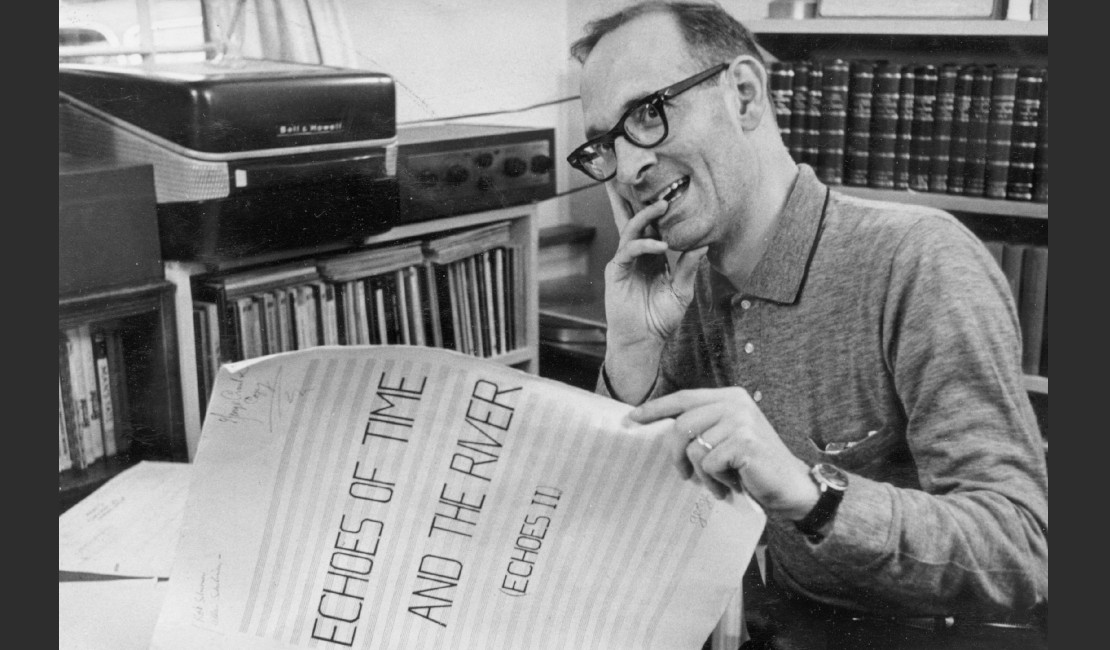
“Otherworldly, poetic, sometimes nightmarish sounds”: so runs The New York Times’ evocative description of the music of Grammy and Pulitzer Prize-winning composer George Crumb (1929-2022). Crumb was extremely popular with a range of choreographers from the 1970s to 2000s.
Choreographers who have drawn on Crumb’s music include Paul Taylor (his “Fiends Angelical” uses Crumb’s seminal string quartet Black Angels), Martha Graham (Crumb’s Lux Aeterna accompanies Graham’s “Phaedra's Dream”), John Butler (“According to Eve” for Alvin Ailey American Dance Theater draws on Crumb’s cycle Ancient Voices of Children), and Tero Saarinen (Vox Balaenae), among others. Filled with haunting, often ritualistic, abstract soundscapes, Crumb’s music has the potential to highlight a broad range of gestural, emotional, and thematic ideas.
Here are a few recommendations from his catalogue that might be a good fit for your next dance:
A Little Suite for Christmas, A.D. 1979
15 minutes
Inspired by nativity frescoes of the Arena Chapel in Padua, Italy, this seven-part suite for solo piano is a perfect Nutcracker antidote. With each movement focusing on a different moment of the nativity story, Crumb’s music provides appropriate moods for a wide variety of gestures — from the tender, quasi-Impressionistic “Berceuse for the Infant Jesu” to the percussive repeated chords of the “Nativity Dance.”
Echoes of Time and the River (Echoes II)
18 minutes
There is an underwater, otherworldly feeling to this Pulitzer Prize-winning composition from 1967. The score includes a series of processionals and stage instructions for the musicians — details that beg for reinterpretation through dance. Throughout, Crumb balances sonic ambition with personal touches, such as the recurring whispered line “Montani semper liberi” (“Mountaineers are always free”), the motto of Crumb’s home state of West Virginia.
Songs, Drones, and Refrains of Death
30 minutes
This composition is a stand-out with its use of the voice, which is often heightened and shout-like. Described by The Guardian as “one of George Crumb’s most haunting and haunted works,” the cycle is an exploration of Federico Lorca’s poetry. It conveys a mystical vision of death out of the Spanish tradition, with “refrain” movements that invite cyclical or developmental treatment.
Vox Balaenae
18 minutes
If you are looking for a score to make commentary on the state of the planet, look no further than Crumb’s Vox Balaenae, inspired by the sounds of humpback whales. Consisting of a prologue, a set of variations, and a coda, this “eco-soundscape is the clearest expression of [Crumb’s] environmental concerns.” When staged with live musicians, Crumb demands that the three players should each wear masks, in order to “efface the sense of human projection.”